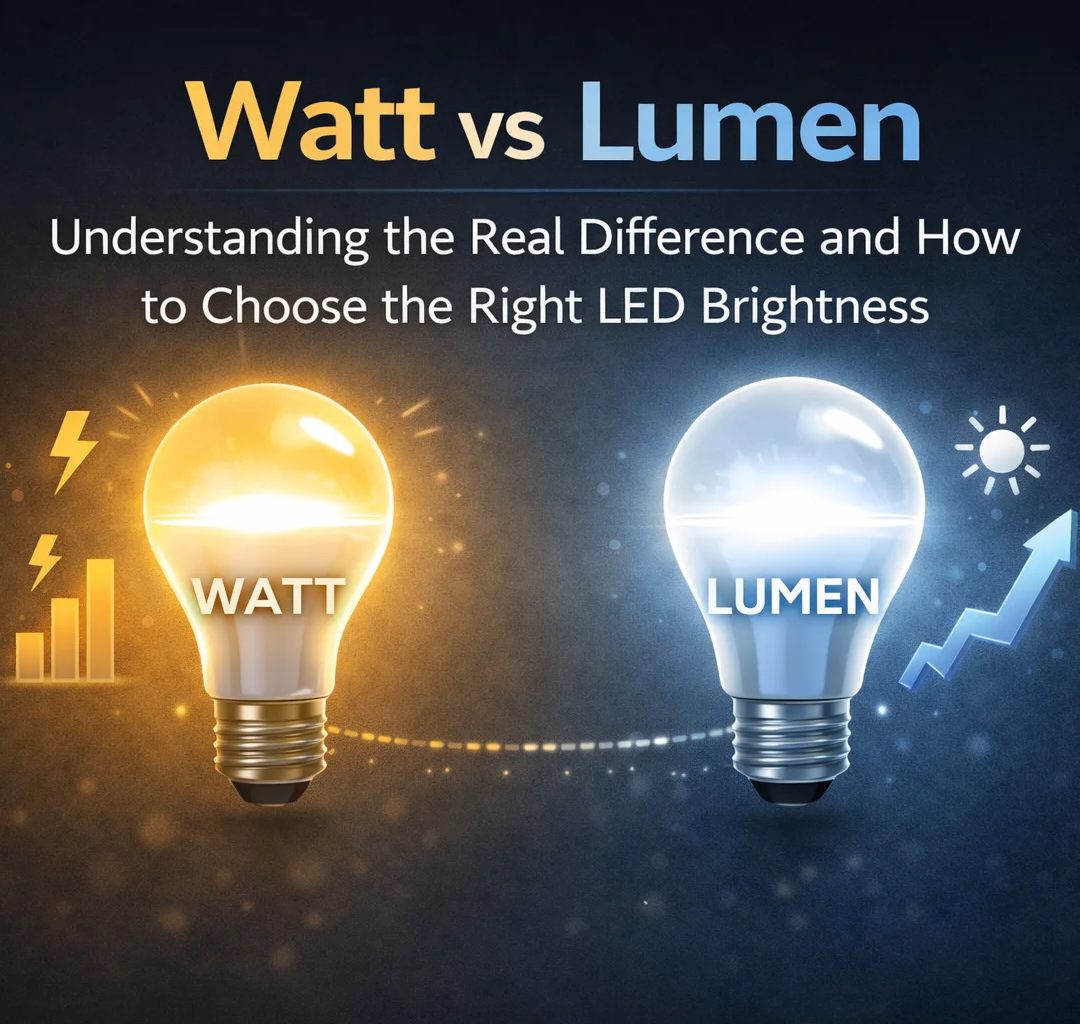
When shopping for lighting fixtures, have you ever wondered what the difference is between lumens and watts? Many homeowners still use watts as a way to judge brightness, but with today’s energy-efficient LED technology, that approach can be misleading. Understanding lumens and watts can make it much easier to choose the right lighting for every room in your home.
In this guide, we’ll explain what lumens and watts mean, highlight the key differences, and help you choose the best LED lighting for your space.
What Are Lumens?
Lumens indicate how much light a bulb gives off, or how bright it appears. The higher the lumen rating, the brighter the light will appear. For example:
- 450 lumens = similar brightness to a traditional 40-watt incandescent bulb
- 800 lumens = similar brightness to a traditional 60-watt incandescent bulb
- 1,100 lumens = similar brightness to a traditional 75-watt incandescent bulb
- 1,600 lumens = similar brightness to a traditional 100-watt incandescent bulb
When comparing modern LED bulbs, lumens are the most important number to look at if your goal is finding the right level of brightness.
What Are Watts?
Watts measure how much energy a light bulb uses, not how bright it is.
In the past, consumers associated higher wattages with brighter bulbs because incandescent lights required more electricity to produce more light. However, LED technology has changed that relationship.
Today’s LEDs use far less energy while producing the same amount of light. For example, an LED bulb may produce 800 lumens while using only 8 to 10 watts of power.
Because of this efficiency, watts are now best used to understand energy consumption rather than brightness.
Lumens vs. Watts: What’s the Difference?
The easiest way to remember the difference is:
- Lumens = brightness
- Watts = energy use
If you’re replacing older bulbs with LEDs, focus on matching the lumens rather than the wattage. This ensures you get the level of light you want while benefiting from lower energy costs.
For homeowners looking to reduce electricity usage without sacrificing comfort or visibility, LED lighting offers the best of both worlds.
Lumens – Initial vs Delivered: What’s the Difference?
The initial lumens is the amount of light before any glass or lens is placed over the LED. The delivered lumens is the amount of light after the glass or lens is put on. When choosing a light fixture, always look for delivered lumens so you know how much light you’re actually getting.
How Many Lumens Do You Need?
Different rooms require different amounts of light. While personal preference plays a role, these general guidelines can help:
Living Rooms
- 1,500 to 3,000 lumens
- Comfortable lighting for relaxing, entertaining, and daily activities
Kitchens
- 3,000 to 4,500 lumens
- Brighter lighting for cooking and food preparation
Bedrooms
- 1,000 to 2,000 lumens
- Softer lighting that promotes comfort and relaxation
Bathrooms
- 2,000 to 4,000 lumens
- Sufficient brightness for grooming and personal care tasks
Layering ambient, task, and accent lighting can help create a balanced and functional lighting design throughout your home.
Why Lighting Selection Matters
Choosing the right LED bulb involves more than simply picking the brightest option. The size of the room, ceiling height, fixture design, and intended use all influence how much light is needed.
This is where experienced lighting consultants can be especially helpful. By evaluating your home’s layout and lighting goals, they can recommend fixtures and bulbs that provide the right balance of brightness, comfort, and energy efficiency.
Find the Right Home Lighting Solution
Whether you’re updating a single room or planning a complete home lighting upgrade, understanding lumens and watts is the first step toward making a smart choice. If you’re looking for expert guidance, we can help. At The Lighting Warehouse, our team of lighting consultants can help you compare options, select the right LED products, and create a home lighting plan that works beautifully for your space. Contact us today to explore lighting solutions that combine comfort, style, and energy efficiency.